Energy Psychology
What’s Energy Psychology and Why’s It So Buzz-Worthy?
Energy psychology is where science meets your body’s vibes—literally. This holistic approach taps (pun intended) into the connection between your emotions, thoughts, and the body’s energy systems to help you feel better from the inside out.
Here’s the scoop: emotions and thoughts aren’t just in your head—they’re tied to your body’s energy pathways. When things get out of balance, it can show up as anxiety, stress, or even physical symptoms. That’s where energy psychology comes in, using techniques like Emotional Freedom Techniques (EFT)—aka tapping—to help release emotional blockages and restore balance. Think of it as acupuncture for your emotions, but without the needles!
Other tools in the energy psychology toolbox include chakra balancing, meridian tapping, and body-based techniques designed to realign your energy and bring some much-needed calm. Whether you’re tackling trauma, phobias, or stress, these methods work alongside traditional therapy to give your mental health an extra boost.
The science behind energy psychology is still growing, but the results speak for themselves—many people report feeling lighter, more balanced, and more in control. Ready to give your body and mind a little energetic reset? Let’s tap into your potential!
Article Spotlight
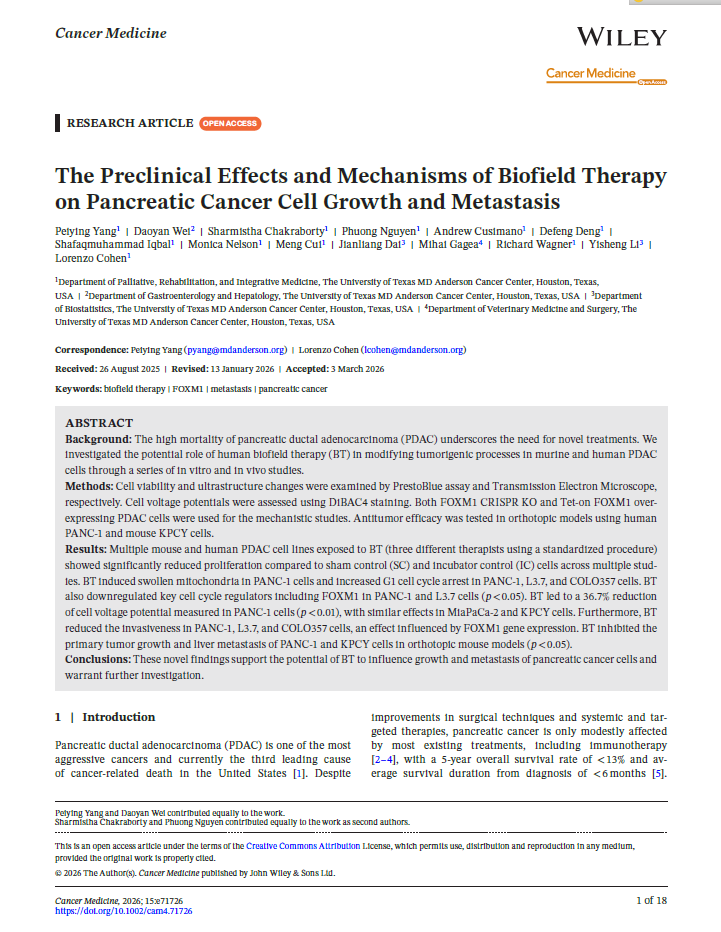
This 2026 study from MD Anderson Cancer Center, published in the peer-reviewed journal Cancer Medicine, found that biofield therapy slowed pancreatic cancer cell growth, reduced the ability of cancer cells to spread, altered cancer-related proteins (including FOXM1), and decreased liver metastasis in mouse models. The researchers also identified measurable biological changes, including altered mitochondrial structure, cell membrane voltage, and cell cycle regulation.
Why it’s evidence-based:
The study used rigorous scientific methods, including multiple cancer cell lines, patient-derived tumor organoids, mouse models, sham controls, blinded analyses, replication with three different biofield practitioners, and objective laboratory measurements.